Cortisol Reduction: Why Lifestyle Tips Fall Short and What Actually Works
Cortisol reduction — evidence-based. Why standard tips fail with chronic HPA-axis dysregulation and which clinical interventions measurably work.
Cortisol reduction — 79,000 people monthly search for this answer in English-speaking regions. The irony: most results deliver identical generic recommendations — meditation, tea-drinking, walks. These suggestions are not wrong, but they address a different problem. When your cortisol runs chronically elevated — not as fleeting stress response but as persistent neuroendocrine state — you are dealing with HPA-axis dysregulation that lifestyle tips cannot penetrate. This article explains why standard methods fail with chronic elevation, which evidence-based alternatives exist, and where the boundary between self-help and clinical necessity lies.
What Is Cortisol and Why Is It Chronically Elevated?
Cortisol is the human body’s primary stress hormone, synthesized in the zona fasciculata of the adrenal cortex under HPA-axis control (Hypothalamic-Pituitary-Adrenal axis). In its acute function, cortisol is vital: it mobilizes glucose, regulates inflammatory responses, and prepares the organism for threats.
The problem begins when this acute reaction turns chronic. With sustained stress exposure — occupational pressure, emotional burden, sleep loss, chronic inflammation — the HPA-axis loses its capacity to downregulate. The adrenal cortex no longer produces cortisol rhythmically (high morning peak, low evening level) but flatly and persistently. We term this HPA-axis dysregulation — and it is the central mechanism behind burnout, chronic exhaustion, and metabolic deterioration.
- HPA-Axis Dysregulation
- A state where the negative feedback loop of the Hypothalamic-Pituitary-Adrenal axis fails — cortisol remains elevated despite absent acute stressor. Not identical to "adrenal fatigue" (a popular, clinically imprecise term).
- Cortisol Awakening Response (CAR)
- The natural cortisol rise in the first 30-45 minutes after waking. With HPA-axis dysregulation, CAR flattens or inverts — a diagnostically valuable marker.
Reducing Cortisol Through Nutrition: What Research Reveals
Nutrition influences cortisol regulation through three mechanisms: blood sugar stability, micronutrient provision, and inflammation modulation.
Blood Sugar Stabilization: Pronounced glycemic swings trigger cortisol release as compensatory counter-regulation. Meals with low glycemic index, adequate protein, and healthy fats stabilize blood sugar and reduce cortisol spikes. Intermittent fasting can prove counterproductive with already dysregulated HPA-axis — the fasting stress compounds existing cortisol excess.
Magnesium and B-Vitamins: Magnesium cofactors over 300 enzymatic processes, including cortisol synthesis. Deficiency perpetuates HPA-axis overactivation. 400-500 mg elemental magnesium (as glycinate) daily shows moderate cortisol reduction. Vitamin B5 (pantothenic acid) and B6 prove essential for adrenal function.
Omega-3 Fatty Acids: EPA and DHA reduce pro-inflammatory mediators overactivating the HPA-axis. Minimum 2-3 g combined EPA/DHA daily constitutes the evidence-based threshold — ideally as molecularly distilled fish oil concentrates.
Anti-Inflammatory Eating Patterns: Polyphenol-rich foods (blueberries, turmeric, green tea) modulate NF-κB-mediated inflammatory cascades perpetuating chronic HPA-axis overactivation. Avoid ultra-processed foods, which through oxidative stress and intestinal permeability indirectly perpetuate cortisol release. The gut-brain axis — mediated by the vagus nerve — means intestinal inflammation carries direct consequences for central stress regulation.
Cortisol and Body Composition: The Vicious Cycle of Stress and Fat Deposition
Cortisol reduction and weight loss prove inseparable — yet most diets disregard this connection. Elevated cortisol production rates and free cortisol correlate with visceral fat and insulin resistance, not subcutaneous fat. This means: cortisol preferentially deposits fat intra-abdominally — the most hazardous fat compartment.
Visceral fat represents no passive energy storage. It functions as an endocrine organ, producing its own cortisol (via local 11β-HSD-1 enzyme activity), releasing pro-inflammatory cytokines, and perpetuating insulin resistance. The result is a vicious cycle: stress → cortisol → visceral fat → more cortisol → more fat → insulin resistance → more stress.
Conventional diets fail in this state because they do not address the cortisol loop. Caloric restriction without HPA-axis regulation increases cortisol further — your body interprets the diet as additional stressor. Cortisol reduction therefore becomes prerequisite for sustainable weight regulation, not consequence.
The clinical consequence is clear: before beginning another diet, have your cortisol daily profile determined. If morning values exceed 25 µg/dL and evening values do not fall below 5 µg/dL, weight loss without neuroendocrine intervention carries minimal success probability. Your focus must shift to HPA-axis recalibration — weight then regulates itself as consequence, not goal.
How Can I Reduce Cortisol Naturally? Evidence-Based Methods
Sleep Optimization
Sleep deprivation associates with elevated resting cortisol levels and exaggerated cortisol response to stressors. The cortisol increase following sleep loss reaches 37-45% the following evening. Consistent sleep times, dark and cool sleeping environment (16-19°C), and morning light exposure normalize circadian cortisol rhythm. Sleep optimization proves the most effective single lifestyle intervention.
Concrete recommendations: identical sleep-wake times (±30 minutes variance, including weekends). No blue light 90 minutes before sleep. 10-15 minutes morning sunlight within the first hour after waking. Room temperature 16-18°C. Magnesium glycinate (400 mg) 60 minutes before sleep can improve sleep quality and indirectly optimize the cortisol profile.
Breathing Techniques and Vagal Activation
Prolonged exhalation (4-7-8 technique) and cyclic sighing activate the vagus nerve and shift autonomic balance parasympathetically. Vagus nerve stimulation through breathing is one of the few methods acutely reducing cortisol — within minutes, not weeks. Specific exercises with neurobiological explanation appear in our vagus nerve exercises article.
The mechanism: prolonged exhalation increases intrathoracic pressure, stimulates baroreceptors in the aortic arch, and activates the vagal baroreflexes. The result is measurable shift in sympatho-vagal balance — less cortisol, more parasympathetic activity, lower heart rate. Two 5-10 minute sessions daily suffice for significant effects.
Moderate Aerobic Exercise
30-45 minutes moderate aerobic work, 4-5 times weekly. Critical: high-intensity training without adequate recovery increases cortisol — the effect reverses. With chronic HPA-axis dysregulation, lower-intensity movement (walking, swimming, yoga) initially proves superior.
Optimal training intensity reaches 60-70% maximum heart rate. Do not train fasted when cortisol already runs chronically elevated — the fasting stress compounds training stress. Plan 48 hours recovery between intense sessions. The combination of aerobic and resistance training shows strongest long-term HPA-axis regulation effects.
Social Connection and Oxytocin
An underestimated cortisol reducer: oxytocin, released through meaningful social interaction, inhibits ACTH release at the pituitary and reduces HPA-axis responsiveness by 15-20%. Regular, authentic social contact — not digital communication — represents an evidence-based intervention appearing in few cortisol-reduction guides.
Cortisol Reduction Home Remedies
Complete evidence evaluation of natural methods — from adaptogens through cold stimulation to social contact — appears in our detailed home remedy article. There we assess each method by study quality, effect size, and applicability.
Cortisol Reduction: Supplements and Medications Compared
Supplements With Evidence
Cortisol lowering supplements see use by millions — yet only few possess clinical evidence. Ashwagandha (KSM-66) significantly reduces serum cortisol by 27.9% in double-blind RCTs — the strongest single supplement evidence. Phosphatidylserine directly modulates ACTH release at the pituitary, particularly demonstrating evening cortisol reduction effects. L-Theanine reduces acute cortisol response to stressors within 1-3 hours. Rhodiola rosea improves cortisol awakening response in burnout patients with fatigue syndrome. Detailed clinical assessment with dosing, interactions, and limitations appears in our supplement article.
The decisive limitation: all supplements modulate peripheral cortisol release. None addresses central HPA-axis dysregulation. With mild, reactive cortisol elevation, that suffices. With chronic dysregulation, it does not.
Medications
Pharmacological cortisol reduction (ketoconazole, metyrapone, mifepristone) applies exclusively to diagnosed Cushing’s syndrome and belongs in endocrinologist hands. For stress-associated cortisol elevation, these medications remain unapproved and unsupported. Benzodiazepines and SSRIs may indirectly influence cortisol but fail to address HPA-axis causes and create their own long-term problems.
Clinical Cortisol Regulation: HBOT, PBM, and Vibroacoustic Therapy
Here the NEST approach fundamentally diverges from conventional recommendations. With chronic HPA-axis dysregulation, lifestyle interventions and supplements reach their limits — not because they prove ineffective, but because they cannot reach central dysregulation. Clinical intervention must target the cause.
Hyperbaric Oxygen Therapy (HBOT)
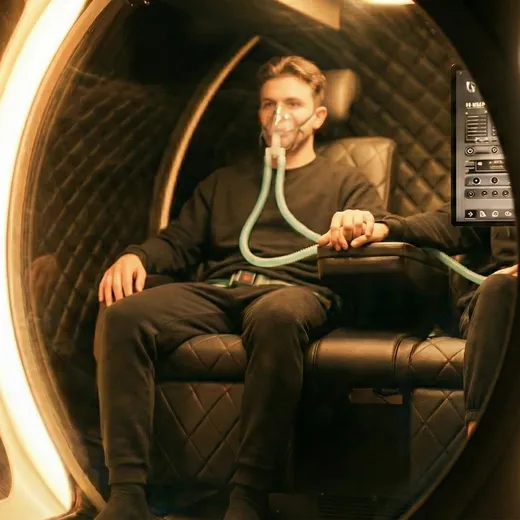
HBOT at 2.4 ATA addresses the mitochondrial energy crisis frequently underlying HPA-axis dysregulation. Under hyperbaric conditions, plasma-dissolved oxygen rises 10-15 fold, directly stimulating mitochondrial ATP production. HBOT restores stress-induced neurochemical dysregulation and improves neuroendocrine flexibility. At NEST, we employ medical HBOT chambers at 2.4 ATA — substantially exceeding pressures soft-shell spa chambers achieve.
Photobiomodulation (PBM)
Clinical PBM at 660nm and 850nm activates cytochrome c oxidase in the mitochondrial respiratory chain, increases ATP production, and reduces neuro-inflammatory markers. Photobiomodulation modulates oxidative stress, thereby addressing the chronic inflammation component perpetuating HPA-axis overactivation. NEST red light therapy employs clinical full-body panels — incomparable to consumer devices.
Vibroacoustic Vagus Nerve Stimulation
The cholinergic anti-inflammatory signaling pathway of the vagus nerve regulates systemic inflammatory response and modulates cortisol release. The Satori RLX System at 40 Hz non-invasively activates this pathway deeper than transcutaneous methods. The combination of HBOT, PBM, and vagal stimulation produces synergistic effects no single protocol alone achieves.
The NEST Triphasic Protocol
Our clinical cortisol-regulation protocol follows a three-phase approach: Phase 1 (weeks 1-2) — mitochondrial restoration through HBOT and PBM, establishing vagal tone. Phase 2 (weeks 3-6) — HPA-axis recalibration through combined protocols, integrating nutrition and sleep optimization. Phase 3 (week 7 onward) — maintenance and self-work with monthly biomarker review. Each phase progresses guided by objective cortisol and HRV measures — no assumptions, only data.
When Home Remedies Prove Insufficient: Signs of Chronic HPA-Axis Dysregulation
The critical question for anyone desiring cortisol reduction: do you experience acute stress response or chronic dysregulation? Lifestyle interventions work with acute stress. With chronic dysregulation, they do not. Recognition signs:
Persistent Exhaustion Despite Sleep: You sleep 7-8 hours yet wake exhausted. The cortisol awakening response (CAR) flattens.
Visceral Fat Deposition: Increasing waist circumference despite unchanged nutrition — the cortisol-obesity signal.
Cognitive Impairment: Brain fog, reduced decision capacity, emotional instability — signs of hippocampal cortisol toxicity.
Intervention Resistance: Cortisol reduction home remedies and supplements show no measurable improvement after 8-12 weeks.
Immunological Vulnerability: Frequent infections, delayed wound healing, chronic inflammation markers — chronically elevated cortisol paradoxically suppresses immune function despite acute anti-inflammatory action.
Sleep Architecture Disorder: You fall asleep easily but wake between 2-4 AM unable to return to sleep. This typifies inverted cortisol curve — your cortisol rises nightly instead of mornings.
When three or more of these apply, clinical intervention becomes indicated. The Burnout Neuro Herstel Retreat at NEST begins with comprehensive biomarker analysis (cortisol daily profile, HRV, inflammation markers) and develops individual protocol from this data. Burnout Recovery Schema describes the systematic reconstruction plan we employ for chronic HPA-axis dysregulation.
The Leiderschap Executive Focus Retreat addresses high-performing leaders requiring cortisol reduction without professional context disruption — cognitive performance optimization concurrent with neuroendocrine recalibration.
NEST diagnostics encompass a cortisol daily profile (4-point salivary cortisol: upon waking, +30 minutes, afternoon, evening), HRV analysis, hs-CRP and pro-inflammatory cytokines (IL-6, TNF-α), plus metabolic markers (HbA1c, HOMA-IR). This data integrates into individualized intervention planning — no one-size approach, but precision medicine for your specific cortisol dysregulation.
Core Message: Cortisol reduction begins with understanding. Understanding that chronically elevated cortisol is not lifestyle problem but neuroendocrine dysregulation. Understanding that home remedies and supplements possess a place — but a limit. And understanding that clinical intervention is not admission of weakness but the precise response to a measurable biological problem. Measure your cortisol daily profile. Begin with evidence-based methods — sleep optimization, breathing techniques, targeted supplementation. And when these prove insufficient after 8-12 weeks — NEST is where clinical depth begins. Your cortisol is a number. Numbers do not deceive. Act accordingly.
Which pattern do you recognise?
Two short questions, three clear options. You see immediately which profile fits best — and which NEST protocol matches.
Which pattern do you recognise most strongly?
The next step, without searching.
Experiences that fit this
"Ruim vier jaar post-covid en na tweeënhalve week zuurstofkamer al verbetering."
"Echt een aanrader voor ondernemers of mensen die even tot rust willen komen en weer helemaal willen opladen."
"Veertig sessies van negentig minuten in acht weken, met HRV, slaapscores en een wandeltest ernaast. Voor onze dochter is het verschil voelbaar."
Want to know what this means for you?
One message is enough. We schedule a fifteen-minute intake, no obligation, and tell you honestly whether NEST fits your question.
Scientific References
"Ashwagandha root extract (KSM-66) significantly reduces serum cortisol by 27.9% versus placebo in a double-blind, randomized, placebo-controlled trial."
"Elevated cortisol production rates and free cortisol correlate with visceral fat and insulin resistance — not subcutaneous fat."
"HBOT restores stress-induced dysregulation of fear extinction and associated neurochemical abnormalities."
"Sleep deprivation associates with elevated resting cortisol levels and exaggerated cortisol response to stressors."
"Photobiomodulation reduces neuro-inflammatory markers and modulates oxidative stress through mitochondrial cytochrome c oxidase activation."
"The cholinergic anti-inflammatory signaling pathway of the vagus nerve regulates systemic inflammatory response and modulates cortisol release."