Recovery cosmetic surgery: HBOT and PBM protocol
Accelerate recovery after cosmetic surgery via HBOT and red light therapy. Practical protocol for breast surgery, facelift and reconstructive procedures.
The Problem: Unpredictable Downtime After Cosmetic Surgery
Recovery from cosmetic surgery is, in standard care, a passive affair: rest, ice, wait. For clients undergoing mammoplasty, facelift, abdominoplasty or reconstructive procedures, this translates into an unpredictable convalescence of two to six weeks, with variable outcomes for swelling, hematoma formation and scar quality.
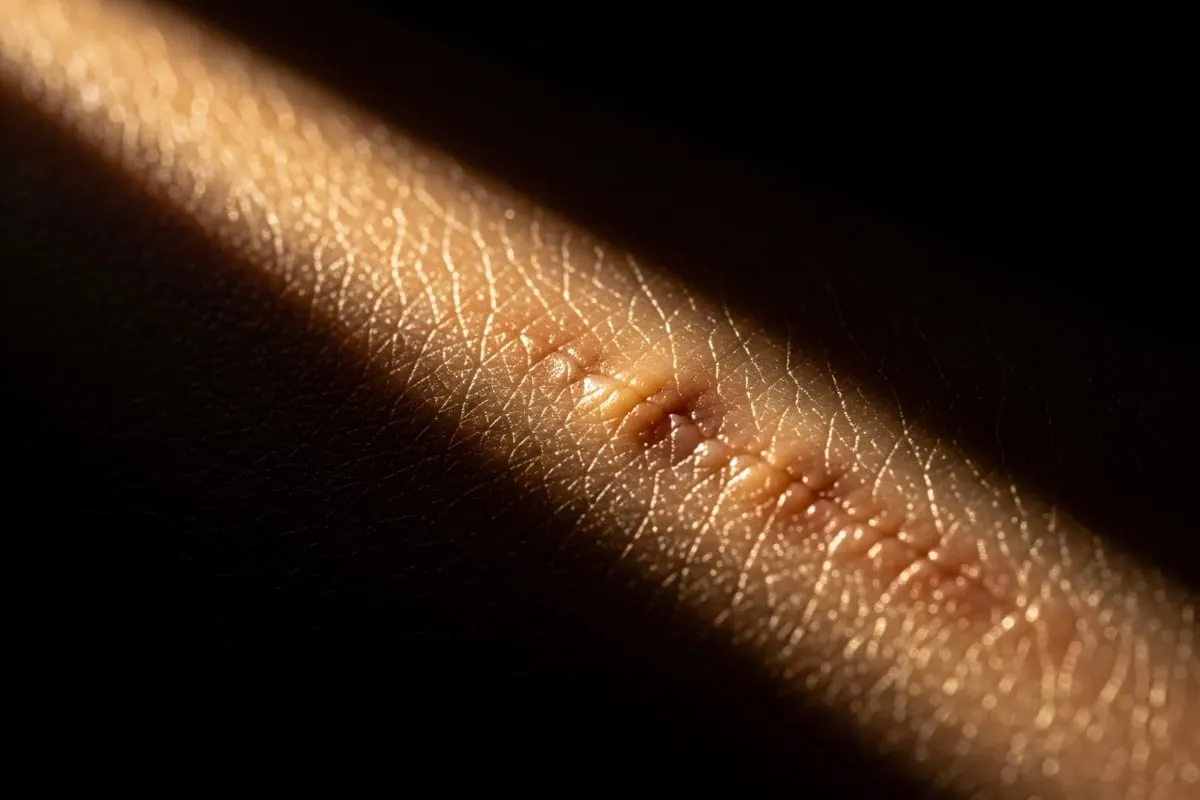
The biological reality explains this variability. A surgical incision creates local ischemia; edema compresses microcirculation; fibroblasts with inadequate ATP supply produce chaotic collagen type III instead of organized type I. The result: hypertrophic or pigment-unstable scars, prolonged swelling and a return to social activity that depends entirely on the pace of spontaneous re-vascularization.
For cosmetic patients this pace is rarely acceptable. The procedure was elective, the outcome must be predictable, and the downtime must fit manageably into a professional and social life.
Recovery After Breast Surgery: The Critical Window
Recovery after breast surgery—mammoplasty, augmentation or reconstruction—has a specific biological profile. The operative site is large, edema formation is significant, and the cosmetic endpoint depends heavily on scar quality and symmetric tissue healing.
The critical window runs from 48 hours pre-operative to 21 days post-operative. Within this window three variables determine the outcome: oxygen supply to ischemic tissue, mobilization of endothelial stem cells for angiogenesis, and mitochondrial activity of fibroblasts during collagen deposition.
Standard care addresses none of these three variables actively. This is where precision intervention makes the difference between an average recovery and a directed one.
HBOT Cosmetic Recovery: The Mechanism
What the sessions actually involve: 90 minutes in a hard-shell chamber at 2.0 to 2.4 ATA, with oxygen from a concentrator (approx. 95%) via mask or BIBS, with air breaks. We schedule those sessions in a fixed pattern around your procedure.
What we do not claim alongside that: that these sessions improve your scars, close your wound faster, or clear your haematomas sooner. The studies reporting such outcomes were run on 100% oxygen in clinical centres under medical supervision — two conditions we do not meet. Your plastic surgeon remains the authority on what your recovery needs, and we ask you to clear participation with them.
What guests themselves report about the sessions is in the reviews; the chamber itself is described in the HBOT laboratory.
Red Light Therapy After Surgery: The Consolidation Phase
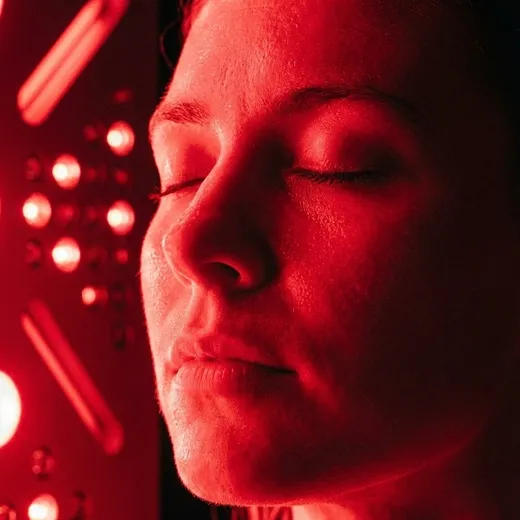
Red light therapy after surgery plays a complementary role in the consolidation phase (day 4-21 post-operative). Photobiomodulation through specific wavelengths (660nm red, 850nm near-infrared) activates cytochrome c oxidase in the mitochondria, raising ATP production and stimulating fibroblast activity.
A 2018 meta-analysis covering 17 controlled studies showed that PBM significantly reduces hypertrophic scar formation when applied in the first three weeks post-operative. The effect runs through two paths: direct stimulation of collagen type I synthesis and down-regulation of pro-inflammatory cytokines (TNF-α, IL-6) that would otherwise drive chronic inflammation and fibrosis.
What that means for you is not something we can fill in ahead of time. Your plastic surgeon assesses your recovery; we provide only the sessions and the schedule around them.
The NEST red light therapy laboratory uses medical-grade full-body panels with calibrated irradiance (100 mW/cm²) for consistent clinical dosing.
The NEST Protocol: The Bridge to Predictable Recovery
You who face a cosmetic or reconstructive procedure have a window in which the outcome of your recovery is still shapeable. The NEST surgical recovery protocol is designed for clients who want to compress downtime and steer the scar outcome.
Your protocol runs in three phases:
Phase 1: Pre-Conditioning (48h pre-op)
Two HBOT sessions at 2.0 ATA. Aim: up-regulation of antioxidant enzymes and mitochondrial optimization. Your tissue is thereby more resistant to the oxidative stress of the procedure itself.
Phase 2: Acute Hyperbaric Cycle (Day 1-7 post-op)
Five to ten HBOT sessions at 2.4 ATA, daily or every other day. Each session delivers plasma oxygen to the ischemic operative site and triggers the first wave of CD34+ mobilization. Hematomas demonstrably resorb faster, edema clears earlier.
Phase 3: PBM Consolidation (Day 4-21 post-op)
Daily PBM sessions (660nm + 850nm) applied to the operative site. This phase steers scar maturation toward collagen type I and prevents the hypertrophic outcome that is otherwise likely with larger incisions.
What You Can Expect: Timeline and Outcome
A typical cosmetic recovery protocol at NEST comprises 12-15 sessions spread over three weeks. Average social downtime—defined as return to professional visibility without visible swelling—is compressed from four weeks (standard) to seven to ten days. Hematomas resorb 40-50% faster based on clinical observation and serial ultrasound examination.
The scar outcome is harder to quantify but measurable. At six-month follow-up, protocolled patients show lower Vancouver Scar Scale scores for vascularity, pigmentation and height. For mammoplasty patients this means linear scars that are pigment-stable within one year, instead of the two to three years required for spontaneous maturation.
Core Message
What we offer is a schedule: hyperbaric sessions and red light, planned around the weeks after your procedure, with supervision at every session. What that does to your downtime or your scar is not something we promise — that is a medical judgement that belongs with your surgeon, not with us.
Which pattern do you recognise?
Two short questions, three clear options. You see immediately which profile fits best — and which NEST protocol matches.
Which pattern do you recognise most strongly?
The next step, without searching.
Experiences that fit this
"Echt een aanrader voor ondernemers of mensen die even tot rust willen komen en weer helemaal willen opladen."
"Ondanks mijn zware werkweekend ga ik hier uitgerust vandaan."
"Een wereld waarbij de tijd stilstaat en er tegelijkertijd de mogelijkheid is om kennis te maken met technologie die zijn tijd ver vooruit is."
Want to know what this means for you?
One message is enough. We schedule a fifteen-minute intake, no obligation, and tell you honestly whether NEST fits your question.
Scientific References
"Hyperbaric oxygen therapy mobilises CD34+/CD45-dim stem cells into the circulation, with a dose-dependent increase as oxygen pressure rises."
"A meta-analysis of fractional laser therapy for surgical scars shows significant improvement in scar quality versus control."