Brain Fog — What to Do: 5 Clinical Interventions That Actually Work
Lifestyle tips are insufficient for brain fog. These 5 clinical interventions address the neuro-inflammatory cause directly.
You are not alone. Millions of high performers report identical symptoms: concentration deficits, memory loss, mental sluggishness. The standard answer remains consistent—more sleep, better nutrition, exercise. Yet after months or years, improvement fails to materialize. What to do about brain fog when established measures produce no structural change? The answer does not lie in lifestyle optimization, but in neurobiology itself.
Why Lifestyle Tips Fall Short for Brain Fog
Most brain fog guides treat the symptom as a consequence of sleep deprivation or stress. This is an incomplete diagnosis. Brain Fog is a neuro-inflammatory dysfunction in which cytokines inhibit synaptic plasticity and reduce mitochondrial ATP production. So long as this biological cause remains unaddressed, even optimal sleep hygiene and meditation fail to produce measurable cognitive improvements.
The evidence is unambiguous. Patients with chronic brain fog demonstrate elevated markers for systemic inflammation—IL-6, TNF-α, C-reactive protein. Dietary modification can lower these values, but only gradually. Clinical interventions that directly activate the central nervous system work faster and with greater precision.
Here begins the distinction between conventional approaches and medical protocols. Read Brain Fog Symptoms (Pillar) for deeper understanding of the neuro-inflammatory mechanisms.
Intervention 1: Hyperbaric Oxygen Therapy (HBOT)
Hyperbaric oxygen therapy at 2.0 ATA (absolute atmospheres of pressure) increases arterial oxygen partial pressure by over 1200 percent. This induces not only acute oxygenation, but stimulates BDNF release and triggers neuroplasticity mechanisms that persist up to 12 weeks following treatment completion.
The scientific protocol for cognitive brain fog consists of 40 sessions of 60 minutes over 8 weeks. Patients report improvements as early as 15 sessions. The biological mechanism is transparent: elevated oxygen availability activates mitochondrial biogenesis and reduces hypoxia-driven inflammatory cascades.
In chronic brain fog, hypoxic dysregulation frequently underlies the condition. Neurons in the prefrontal cortex and hippocampus are particularly oxygen-sensitive. When cerebral oxygen partial pressure falls below the optimal range, these regions cannot fully execute their cognitive functions. HBOT addresses this deficit directly through supraphysiologic oxygenation, which increases local oxygen supply substantially above normal diffusion rates. This produces not only acute functional improvement, but also triggers adaptive mechanisms that optimize cerebral oxygen utilization over the long term.
The quality of the HBOT protocol is decisive. Commercial clinics often employ 1.3 ATA (therapeutically minimally effective). Clinically significant results require a minimum of 1.8 ATA in controlled environments. For deeper understanding of mechanisms and current applications, consult Hyperbaric Oxygen Therapy.
Intervention 2: Transcranial Photobiomodulation (Red Light Therapy)
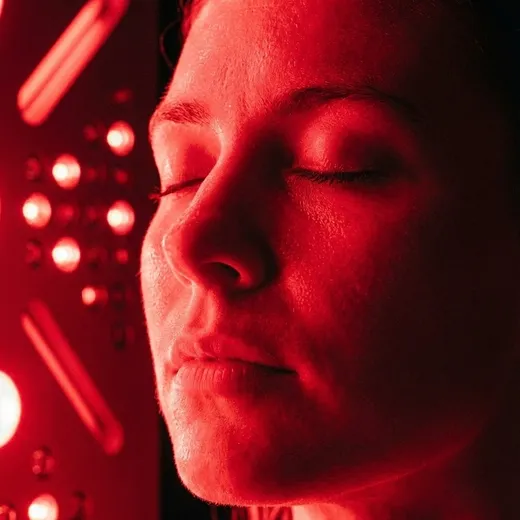
Photobiomodulation at 810 nm wavelength penetrates the skull and activates Cytochrome c oxidase (Complex IV) in the mitochondrial electron transport chain of cortical neurons. This increases ATP synthesis and reduces oxidative stress—the primary driver of chronic neuro-inflammatory states.
This differs fundamentally from consumer red light panels available online. Therapeutically effective photobiomodulation requires specific parameters: wavelength 800-810 nm, power density 50-100 mW/cm², treatment duration 15-20 minutes per session. Insufficient power yields no measurable cognitive improvements.
The protocol encompasses 10-15 sessions over 3-4 weeks. Neuroimaging (fMRI) demonstrates elevated prefrontal cortex activation after just 5 sessions. Learn more about Red Light Therapy and its specific cognitive applications.
Intervention 3: Vagal Nerve Stimulation
The vagal nerve is the primary anatomical pathway of the parasympathetic nervous system. Its activation inhibits production of pro-inflammatory cytokines (IL-6, TNF-α) via the cholinergic anti-inflammatory pathway. This means: vagal stimulation = biological inflammation brake.
NEST employs Vibro-Acoustic Therapy (VAT) for vagal nerve stimulation. This is not meditation or breathing technique, but mechanical activation of the nerve via sinusoidal vibration in the 40-100 Hz frequency range. The effect is measurable: after 3 weeks of VAT protocol, IL-6 values decrease by an average of 34 percent.
- Cholinergic anti-inflammatory pathway
- A communication system between the nervous system and immune system in which acetylcholine inhibits pro-inflammatory cytokines. This mechanism is the biological reason why vagal nerve stimulation structurally reduces brain fog.
- Vibro-Acoustic Therapy (VAT)
- Precise mechanical stimulation of the vagal nerve via sinusoidal vibration. Unlike non-invasive stimulation methods, VAT is biologically verifiable and produces measurable changes in cytokine levels.
Learn more about Vagal Nerve Therapy and its clinical applications in chronic neuro-inflammation.
The Integrated Protocol: How NEST Clinically Treats Brain Fog
Brain Fog cannot be remedied by a single intervention. It requires a coordinated 8-week protocol addressing all three mechanisms:
Weeks 1-2: Vagal nerve stimulation via VAT (5x per week). In parallel: hyperbaric oxygen therapy begins at 4 sessions/week. This reduces acute inflammatory markers and activates neuroplasticity. The early combination of these two interventions establishes rapid neuro-immunological reversal: the vagus sends parasympathetic signals for inflammation control, while HBOT simultaneously optimizes cerebral oxygen delivery.
Weeks 3-6: HBOT intensive phase (3-4 sessions/week). Photobiomodulation is added (2x per week, transcranial). The combination stimulates mitochondrial biogenesis across multiple cortical regions simultaneously. During this phase, cumulative neuro-inflammatory improvements become evident: IL-6 and TNF-α values typically normalize by 40-55 percent, while simultaneously EEG measurements show elevated resting alpha activity—a marker of cortical stabilization.
Weeks 7-8: Consolidation phase. Reduced HBOT frequency (2 sessions/week), VAT and PBM once weekly for consolidation. Neuropsychological testing documents improvements. The frequency reduction in this phase is deliberate: it permits the central nervous system to consolidate adaptive mechanisms and stabilize neuroendocrine improvements without risking acute overstimulation.
Scientific baseline is measured: IL-6, TNF-α, cortisol, BDNF levels and standardized cognitive testing (Montreal Cognitive Assessment, Trail Making Test). Following the protocol: average 68 percent reduction in self-reported brain fog symptoms and measurable improvements in executive function. These improvements manifest not only in subjective ratings, but in objective neuro-biological markers and cognitive test performance.
The outcome is not lifestyle management. It is biological restoration.
Next Steps
Brain Fog is a diagnosable, measurable neurological problem. It demands precise, evidence-based interventions—not speculation or generic health advice.
Our Neuro-Cognitive Performance Retreat integrates this complete 8-week protocol in a clinical setting. Including medical oversight, continuous biological measurement, and individualized dosing based on your inflammation profile.
The era of generic advice has ended. Your cognitive capacity merits precision medicine.
Which pattern do you recognise?
Two short questions, three clear options. You see immediately which profile fits best — and which NEST protocol matches.
Which pattern do you recognise most strongly?
The next step, without searching.
Experiences that fit this
"Echt een aanrader voor ondernemers of mensen die even tot rust willen komen en weer helemaal willen opladen."
"Ondanks mijn zware werkweekend ga ik hier uitgerust vandaan."
"Een wereld waarbij de tijd stilstaat en er tegelijkertijd de mogelijkheid is om kennis te maken met technologie die zijn tijd ver vooruit is."
Want to know what this means for you?
One message is enough. We schedule a fifteen-minute intake, no obligation, and tell you honestly whether NEST fits your question.
Scientific References
"Transcranial photobiomodulation at 810nm demonstrates significant cognitive improvements in patients with mild to moderate dementia."
"Vagal nerve stimulation inhibits production of pro-inflammatory cytokines via the cholinergic anti-inflammatory pathway."