Sciatica: the cause behind the pain, and why rest alone does not work
Sciatica is not back pain but a nerve problem. Why the pain returns after rest and exercise, and how restoring muscle activation addresses the cause.
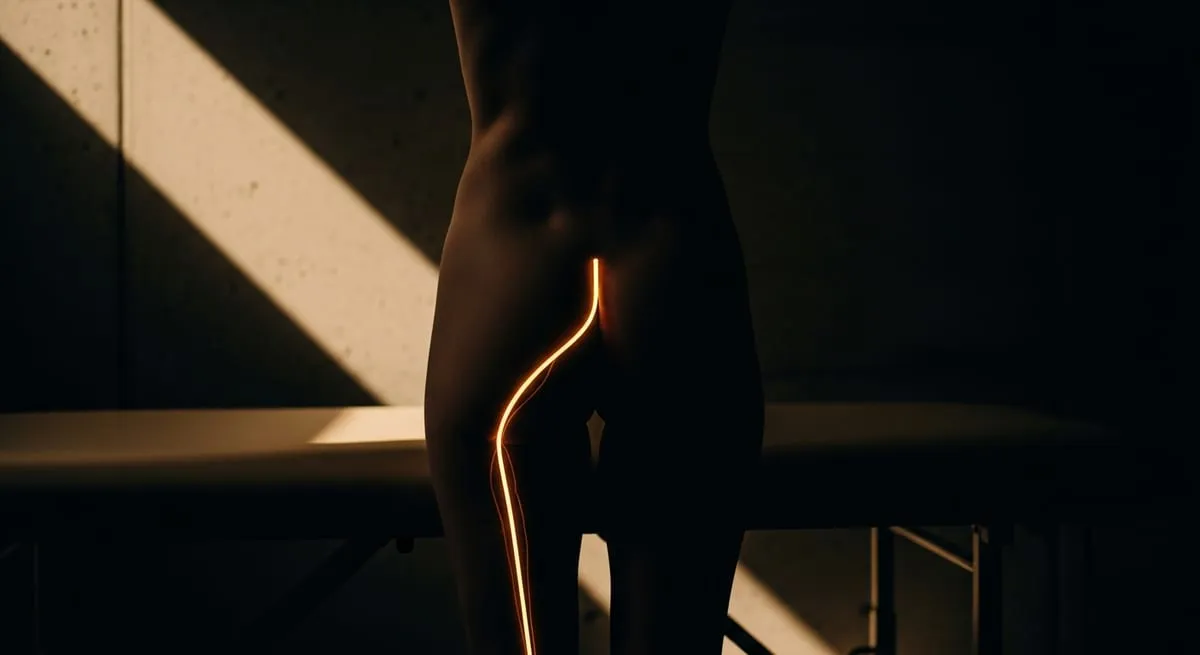
You know the pattern. The pain does not begin in the back but shoots from the buttock into the leg, sometimes as far as the calf or foot. Sciatica is not ordinary back pain — it is a nerve problem that announces itself as a sharp, radiating line that turns standing, sitting and walking into a calculation. The doctor prescribes rest. The internet prescribes stretches. And still the pain returns after weeks, as if something has not been resolved. That is correct: something has not been resolved.
What sciatica is: the nerve, not the muscle
Sciatica refers to pain along the course of the sciatic nerve — the thickest nerve in the body, running from the lower back through the buttock into the leg. When a nerve root in the lumbar spine comes under pressure or becomes irritated, a characteristic picture emerges: a radiating, burning or stabbing pain on one side, often accompanied by tingling, a numb sensation or loss of strength in the leg.
This is the crucial distinction. Most people experience sciatica as back pain, but the pain you feel is not the muscle — it is the nerve relaying a signal that higher up, in the lower back, a mechanical or neurological problem exists. The leg hurts because the cause sits in the back. Treating only the leg or the buttock means treating the echo and not the source.
The cause of sciatica: where the pressure comes from
The direct trigger is usually one of three things: a bulging or ruptured disc (herniation) pressing on the nerve root, a narrowing of the spinal canal, or a cramped buttock muscle (piriformis syndrome) trapping the nerve. These mechanical causes are real and sometimes serious.
But there is a layer beneath. The spine is held stable by deep, segmental muscles — the multifidus foremost. In almost everyone with recurrent low back complaints this muscle no longer functions well: not because it is too weak, but because the drive from the nervous system falters. This activation deficit of the multifidus is a demonstrated underlying mechanism behind the recurrence of low back complaints. The stabilising layer drops away, the vertebrae take on more load, and the chance that a nerve root becomes trapped again rises. Sciatica is therefore rarely a one-off accident. It is often the visible consequence of a back that has lost its own stability.
Why rest and sciatica exercises alone often do not work
Rest calms the acute inflammation. Stretches create space. Painkillers dampen the signal. All three have their place in the first phase — and all three miss the core.
The problem is this: the body protects a painful back by switching off the deep muscles. That protective reflex does not disappear on its own when the pain subsides. In fact, research shows that movement exercises improve complaints but leave multifidus activation unchanged. The muscle stays dormant, even when you feel better. As a result the back remains unstable, and the system is essentially waiting for the next attack.
This is why so many people get caught in a cycle: an attack, rest, recovery, relapse. The exercise trains the muscles that still obey. The muscle causing the problem — the switched-off multifidus — you often cannot reach with voluntary movement, because the neurological connection is broken precisely there.
The mechanism: arthrogenic inhibition and the pain gate
Two neurological principles explain both the problem and the solution.
The first is arthrogenic muscle inhibition: a joint or nerve root under stress sends inhibitory signals to the associated muscles, which are then driven less. The multifidus is thus actively “switched off” by the body itself. Targeted electrical stimulation of that muscle can break this inhibition and produces clinically meaningful, lasting improvement in chronic low back pain with this mechanism — the muscle is forced to contract along a route that bypasses the blocked voluntary drive.
The second is the pain gate. According to gate control theory, stimulating large, fast sensory nerve fibres closes a “gate” in the spinal cord, inhibiting the transmission of pain signals from the finer pain fibres. Electrical nerve stimulation uses this principle: not by numbing the pain, but by letting the nervous system itself dampen the pain signal. In sciatica due to a lumbar herniation, this form of stimulation measurably relieves the radiating pain.
The NEST approach to sciatica: bringing back the drive
Anyone who wants to address sciatica structurally must do two things at once: reactivate the switched-off stabilising muscle and interrupt the pain signal so the body releases the protective reflex. This is exactly where passive treatment and isolated exercise reach their limit — and exactly where NEST’s ReLounge back therapy intervenes.
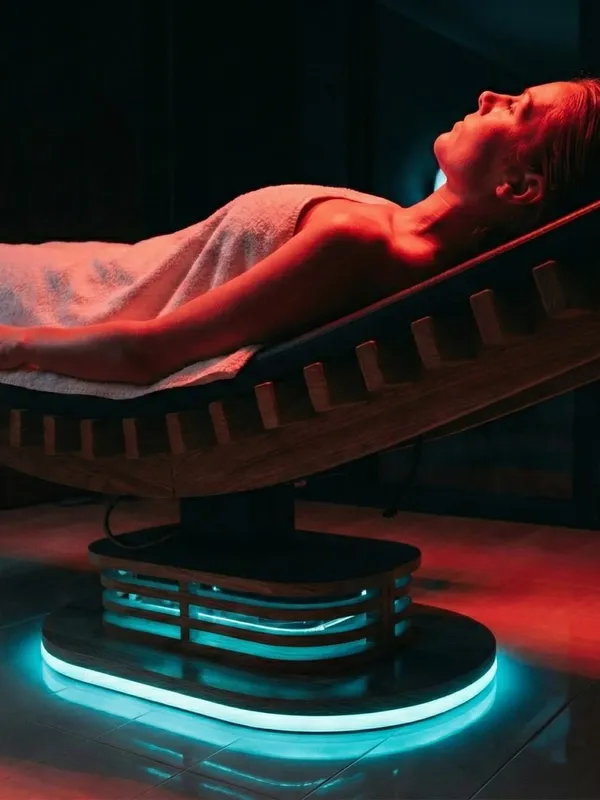
The approach combines three modalities in one reclining session:
| # | Modality | What it does for sciatica |
|---|---|---|
| 1 | EMS (muscle stimulation) | Reactivates the multifidus directly, bypasses the blocked drive and restores the deep stability that relieves the nerve root |
| 2 | TENS (nerve stimulation) | Closes the pain gate in the spinal cord, dampens the radiating pain and breaks the pain memory |
| 3 | Hyperthermia (heat up to 40°C) | Raises circulation and makes the connective tissue around the nerve more supple |
The difference from classic physiotherapy is not a matter of more effort, but of a different point of attack. Where exercise trains the muscles that still obey, electrical stimulation addresses the muscle the body has switched off. You train lying down, in thirty minutes, while the nervous system itself regains control. For anyone who has overloaded the back through years of sitting — the executive chair as a silent assassin — this is not symptom suppression but system repair.
This does not replace a medical diagnosis. With acute loss of function, loss of strength or altered sensation in the saddle area, immediate medical assessment is needed. But for the large group with recurrent, lingering sciatica without a surgical indication, the gain lies not in another period of rest, but in restoring a drive the body has lost.
Sciatica is not a pain you should sit out until it passes on its own — because for most people it does not pass on its own, it returns. The pain in your leg is a signal that the stabilising layer in your lower back is no longer being driven correctly. Rest dampens the signal. Exercise trains around it. Restoring the drive itself is what breaks the cycle. That is where NEST’s ReLounge back therapy begins — not with your effort, but with your nervous system.
The next step, without searching.

Experiences that fit this
"Echt een aanrader voor ondernemers of mensen die even tot rust willen komen en weer helemaal willen opladen."
"Ondanks mijn zware werkweekend ga ik hier uitgerust vandaan."
"Een wereld waarbij de tijd stilstaat en er tegelijkertijd de mogelijkheid is om kennis te maken met technologie die zijn tijd ver vooruit is."
Want to know what this means for you?
One message is enough. We schedule a fifteen-minute intake, no obligation, and tell you honestly whether NEST fits your question.
Scientific References
"An activation deficit of the deep stabilising back muscle (multifidus) is an underlying mechanism behind the recurrence of low back pain."
"Movement exercises improve complaints but leave multifidus activation unchanged; electrical stimulation reactivates the muscle's motor units where exercise alone does not."
"Targeted electrical stimulation of the lumbar multifidus produces clinically meaningful and lasting improvement in pain and disability in chronic low back pain with arthrogenic muscle inhibition."
"In sciatica due to a lumbar disc herniation, electrical nerve stimulation relieves the radicular pain in a placebo-controlled study."