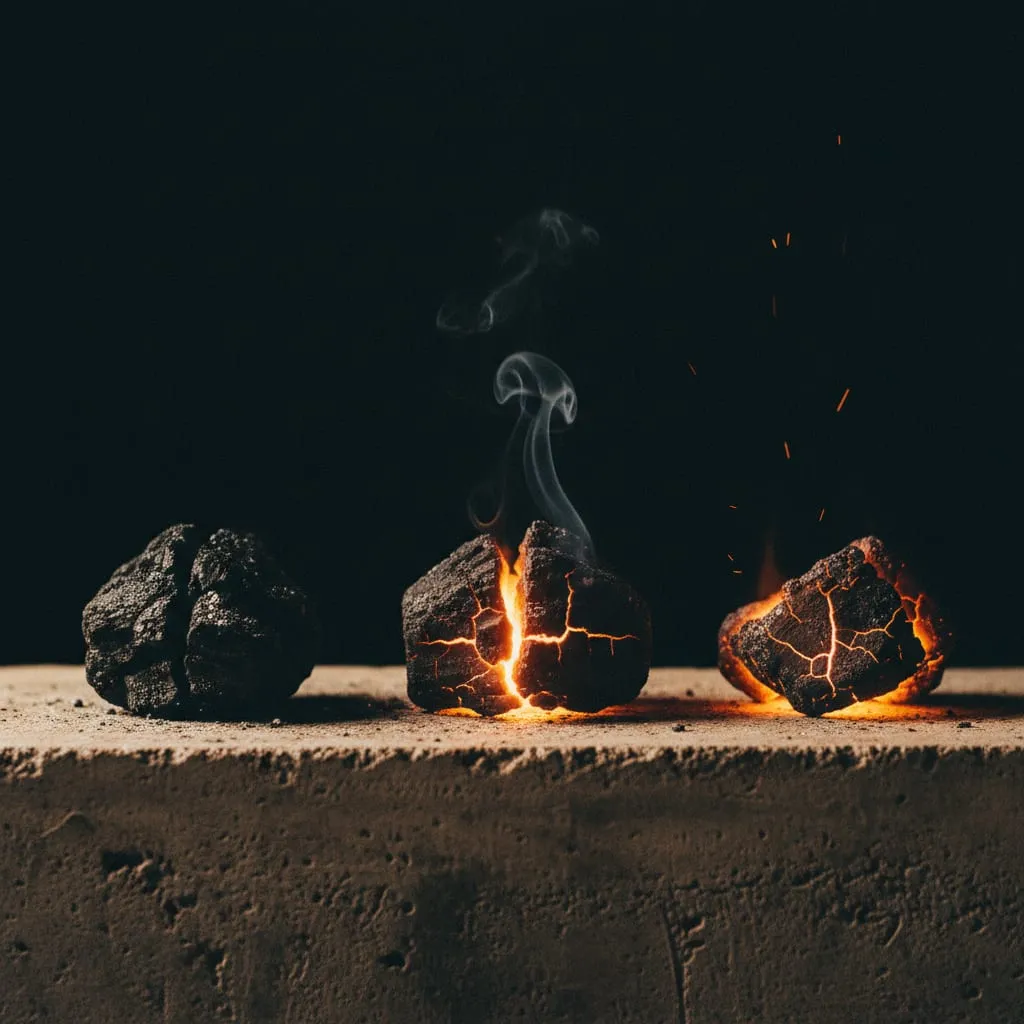
Burnout Recovery Phases: The 3 Cellular Stages of Neurobiological Restoration
The 3 phases of burnout recovery: mitochondrial energy restoration, HPA axis recalibration, and autonomic reintegration with measurable markers.
Burnout recovery phases follow an established neurobiological pattern that has nothing to do with subjective wellbeing. When your organism has endured chronic occupational stress, a cascade of cellular dysfunction occurs that must be systematically reversed. This article describes the three physiological stages your body progresses through, beginning with mitochondrial energy restoration through complete autonomic reintegration.
Classical recommendations for “rest” ignore the underlying pathophysiology of burnout. Your nervous system is not in a state of energetic depletion but in a state of dysregulation where energy-producing systems are reduced to critical thresholds. Only by systematically addressing the three recovery phases can sustainable return to function be achieved.
Phase 1: Mitochondrial Energy Restoration (Week 1-4)
The first burnout recovery phases concentrate on the most fundamental level: mitochondrial ATP production. When your organism is under sustained stress load, mitochondrial dysfunction is caused by activated immune-inflammatory and oxidative stress pathways. This results in an energy deficit that manifests as extreme fatigue, cognitive delays, and reduced immune competence.
During week 1-4, focus must lie on restoring mitochondrial function. This does not occur through psychological interventions but through physiological support. Hyperbaric oxygen therapy (HBOT) serves as an accelerator in this phase, since this approach induces mitochondrial biogenesis and improves cellular energy production via HIF-1α and SIRT1 activation.
Measurable markers for Phase 1 progress include lactate levels, VO2max elevation, and improved oxidative capacity. Your clinical team will monitor these parameters through lactate threshold testing and ergospirometry. An increase of more than 10% in VO2max by the end of week 4 indicates genuine cellular restoration.
Supplementation focuses on cofactors supporting the electron transport chain: CoQ10, carnitine, magnesium, and PQQ. These nutrients are not generic supplements but essential precursors for ATP synthesis.
Phase 2: Neuro-endocrine Balance (Week 4-8)
After mitochondrial function has been rehabilitated, your hypothalamus-pituitary-adrenal axis (HPA axis) must be restored. Burnout is characterized by a dysregulated HPA axis with flattened cortisol curves and diminished cortisol-awakening response. This leads to a paradoxical state: your body can produce energy but cannot regulate it appropriately.
- HPA Axis Dysfunction
- A state in which the normal daily cortisol fluctuation is reduced, leading to insufficient inflammatory control and disrupted circadian rhythms.
- Cortisol-Awakening Response (CAR)
- The physiological elevation of cortisol in the first 30 minutes after waking, crucial for initiative and cognitive activation.
Phase 2 recovery rests on two strategies. First, photobiomodulation (PBM), where infrared light activates the perivascular space and stimulates the vagus nerve. Second, vagal toning through specific breathing and vocalization protocols that directly modulate the dorsal vagal complex.
The daily cortisol curve must be characterized through delayed salivary cortisol measurements. A healthy curve shows a peak around 8:00 AM, gradual decline throughout the day, and low levels before sleep. Without this curve, Phase 3 cannot be initiated.
HRV measurements (heart rate variability) serve as a proxy for HPA axis recalibration. A rising HRV trend over weeks 4-8, particularly in early morning measurements, indicates that parasympathetic hegemony is recovering.
How Long Does Burnout Recovery Actually Take
The classical recommendation to take “six weeks of rest” completely ignores neurobiological reality. Burnout recovery phases last a minimum of 8-12 weeks, but this is a floor, not an average. In many cases, complete functional recovery requires 16-20 weeks.
Why passive rest fails. When your organism is in a state of dysregulation, passive sedentary time exacerbates neurobiological dysfunction. Without active intervention at mitochondrial, endocrine, and autonomic levels, the system remains in an inferior state. Light cognitive and physical work without systematic rehabilitation only leads to chronic undercompensation.
The prevailing science shows that supplemented energy restoration, neuro-endocrine rebalancing, and autonomic reintegration must work together. This requires planned interventions, regular biomarker monitoring, and scalable load increase.
Individual variation plays a role. People with undiagnosed hypothyroidism, prolonged malabsorption, or genetic mitochondrial susceptibility may require 20+ weeks. Therefore, personalized monitoring is essential.
Phase 3: Autonomic Reintegration (Week 8-12)
The final phase of burnout recovery phases concerns re-integration of the autonomic nervous system. By week 8, your mitochondrial functions and HPA axis cortisol signaling have recovered. Now the sympathetic and parasympathetic systems must return to their proper settings.
HRV serves as a compass in Phase 3. While Phase 1-2 primarily addresses cortisol metabolism and energy-ATP status, Phase 3 evaluates the completeness of autonomic balance through HRV asymmetry, LF/HF ratios, and detection of parasympathetic dominance.
Gradual load increase in Phase 3 is not psychological but neurobiologically grounded. Physical training intensity, cognitive workload, and social stimulus are increased based on HRV tolerance indices. A decline of more than 15% in HRV above baseline suggests escalation that is too rapid.
Relapse prevention requires identification of your personal stressor threshold. This is not the conventional advice to “work less hard”. This is a measurable parameter: the amount of work pressure, sleep loss, and social fragmentation your autonomic system can process without falling back into dysregulation.
By the end of week 12, your resting HRV, cortisol curve, and VO2max must all have returned to baselines or exceeded them. This indicates that cellular, endocrine, and autonomic recovery is complete. Without these markers, the likelihood of relapse is significantly elevated.
Next Step: Follow a Systematic Protocol
Burnout recovery phases are not a psychological journey. They are grounded in measurable cellular and neurobiological changes. To achieve effective recovery, your approach must be evidence-based, phase-specific, and continuously monitored.
Consult our Schema Burnout Recovery: The Complete Protocol for a detailed implementation strategy. For accelerated Phase 1 recovery, explore Hyperbaric Oxygen Therapy in Burnout as part of your rehabilitation program.
Our Burnout Neuro Recovery Retreat combines all three phases under clinical supervision, with biomarker guidance and real-time autonomic monitoring. This ensures your recovery not only feels subjectively right but is objectively verifiable at the cellular levels where it actually occurs. EOFEN
Which pattern do you recognise?
Two short questions, three clear options. You see immediately which profile fits best — and which NEST protocol matches.
Which pattern do you recognise most strongly?
The next step, without searching.

Experiences that fit this
"Echt een aanrader voor ondernemers of mensen die even tot rust willen komen en weer helemaal willen opladen."
"Ondanks mijn zware werkweekend ga ik hier uitgerust vandaan."
"Ruim vier jaar post-covid en na tweeënhalve week zuurstofkamer al verbetering."
Want to know what this means for you?
One message is enough. We schedule a fifteen-minute intake, no obligation, and tell you honestly whether NEST fits your question.