Orthosomnia: When Sleep Tracking Causes Stress
You measure everything for the perfect night's sleep, but sleep worse. Discover how data obsession leads to the nocebo effect and orthosomnia.
- Orthosomnia is the obsessive pursuit of perfect sleep data, which paradoxically worsens sleep.
- A low 'Sleep Score' creates a nocebo effect: you feel worse because the data says you slept poorly.
- Subjective calibration (feeling) must take precedence over objective data (measuring).
You optimise everything. You tape your mouth, wear blue-light glasses, the room is 18 degrees and your supplements are timed. The first action in the morning? You check your ‘Sleep Score’ or ‘Recovery’ percentage. Is that score red or low? Then you immediately feel heavier, more tired and irritated. Welcome to the world of Orthosomnia.
The Diagnosis: The Nocebo Effect of Data
Orthosomnia is a clinical term for insomnia or sleep disturbance caused or worsened by an obsession with sleep tracking data and the performance pressure to sleep ‘perfectly’.
When you wake up and see a low score, the Nocebo Effect kicks in. This is the opposite of placebo: the negative expectation (“I slept poorly, so I will be tired”) creates the physical reality of fatigue, regardless of how you actually felt before looking.
The Science: Observer Effect & Hyperarousal
Continuously measuring vital functions can lead to a state of Hyperarousal.
- The observer influences the observed: The knowledge that you are being monitored keeps part of your brain alert.
- Validation dependency: You unlearn the ability to listen to your own body (interoception). You outsource your bodily sensation to an algorithm.
Research shows that people who were incorrectly told they had slept poorly performed worse on cognitive tests than people who had actually slept poorly but thought they had slept well. Your belief drives your biology.
Intervention: Subjective vs. Objective Calibration
At NEST we are fans of data, but only as a servant, not as a master. In our Biofeedback Lab we teach you to recontextualise the data.
The NEST Calibration Protocol:
- Blind Wake-Up: You may not look at your data for the first 60 minutes after waking.
- Body Scan: First assess your own energy, clarity and mood. Give yourself a score.
- Data Check: Only then look at the data.
- Delta Analysis: Is there a difference between your feeling and the data? If you feel well but the ring says ‘poor’, ignore the ring.
Conclusion
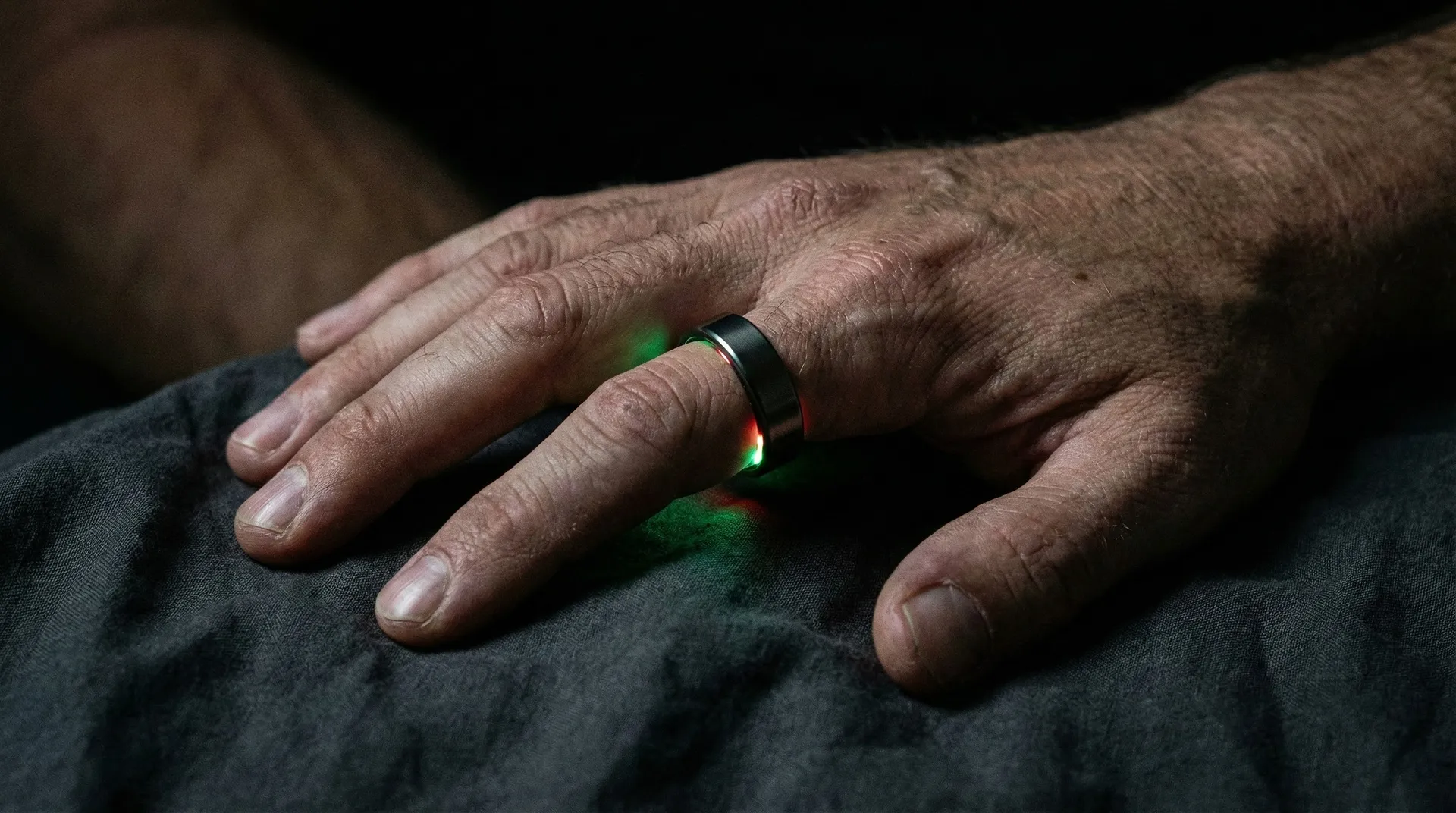
Data is valuable for long-term trend analysis, but toxic as a daily judgement. Do not let an algorithm determine how your day begins. You are the CEO of your own physiology; the ring is merely an adviser.