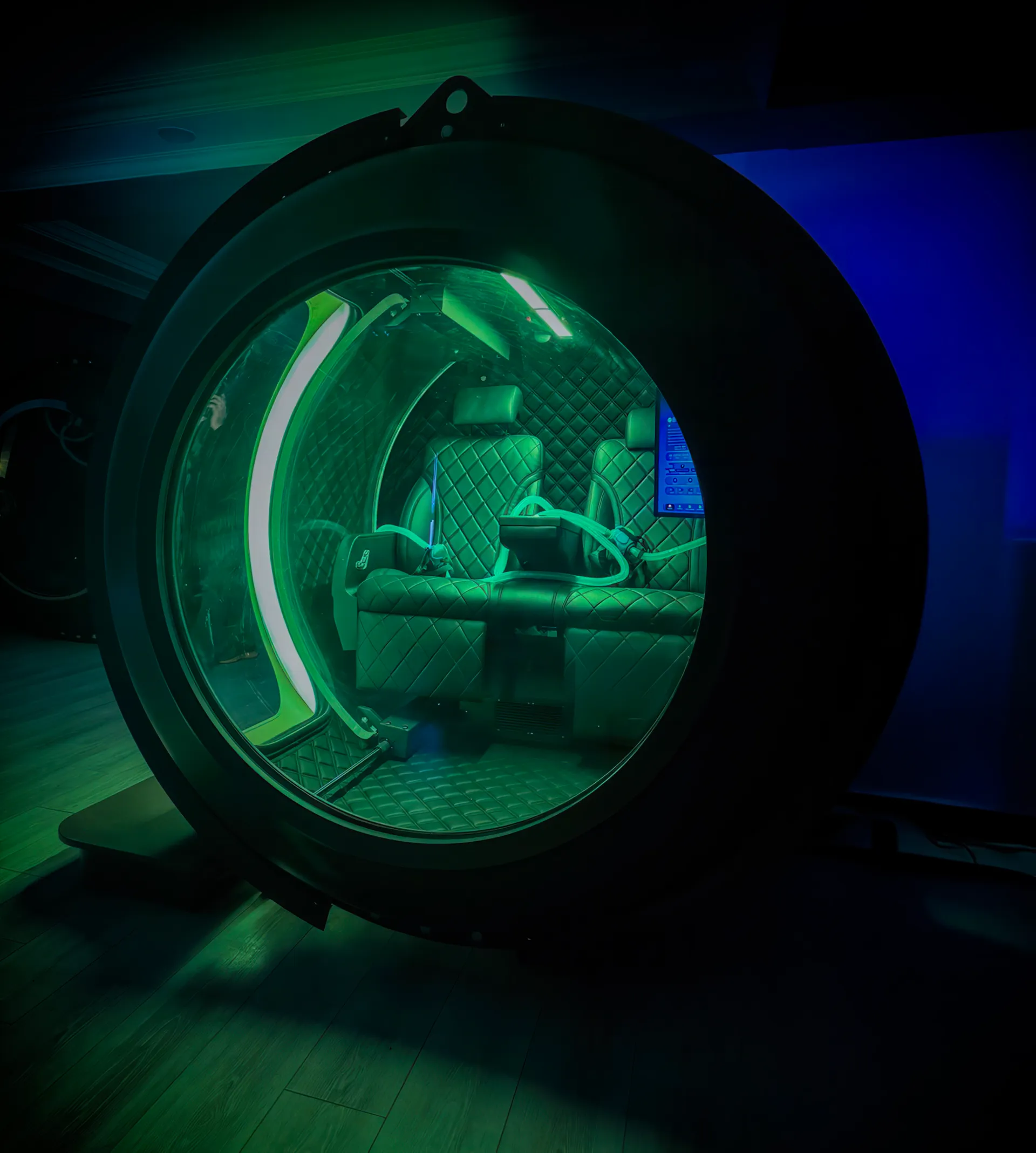
Hyperbaric Oxygen Therapy (HBOT) for Brain Fog
Experiencing brain fog or indecisiveness? Discover how Hyperbaric Oxygen Therapy (HBOT) combats hypoxia in the brain and restores cognitive performance.
- Chronic stress causes hypoxia (oxygen deficiency) in the frontal cortex.
- Hyperbaric oxygen therapy (HBOT) increases oxygen uptake by 1,000-1,500%.
- This triggers the formation of new blood vessels (angiogenesis) and stem cells.
In the modern boardroom, ‘brain fog’ is not an option—it is a physiological failure. Whilst caffeine is merely a loan against tomorrow’s energy, hyperbaric oxygen therapy (HBOT) offers a structural solution.
The Cost of Cortisol
When you operate under high pressure, your body switches to survival mode. Blood is drawn away from the neocortex (where you make strategic decisions) and directed to the muscles. This was useful when we fled from predators, but is disastrous when you need to negotiate a merger.
The result is cerebral hypoxia: a chronic oxygen deficit in the brain. You feel this as haziness, indecisiveness and fatigue that does not disappear after a night’s sleep.
Henry’s Law
This is where physics comes into play. Normally, your red blood cells transport oxygen. However, they are already 96–99% full. Breathing more deeply therefore has little effect.
“Gas under pressure dissolves in liquid. This is not magic; this is Henry’s Law.”
By placing you in an environment with increased atmospheric pressure (up to 2.4 ATA), we force oxygen to dissolve in your blood plasma, lymph fluid and cerebrospinal fluid. We bypass the red blood cells entirely. The oxygen is literally pressed into tissues that are normally unreachable through narrowed blood vessels.
Mitochondrial Biogenesis
This bath of oxygen has a powerful effect on your mitochondria, the energy plants of your cells. Older, inefficient mitochondria are broken down (autophagy) and replaced with new, powerful ones. This process is called mitochondrial biogenesis.
The consequence? Your ATP production (pure energy) shoots upward. Not through sugar or stimulants, but through more efficient combustion at the cellular level.